
Kitchen
Fryers, ranges and extraction switched on at opening and left on. Extraction alone often runs hours past service.

A hotel runs a restaurant, a laundry, a leisure centre and a few hundred bedrooms on one meter. Splitting that meter up is where the savings start.
Fryers, ranges and extraction switched on at opening and left on. Extraction alone often runs hours past service.
Heavy, schedulable load that can frequently move to a cheaper part of the day.
The largest continuous draw in most hotels, and the one most often fighting itself between heating and cooling.
Empty rooms conditioned to the same setpoint as occupied ones.


Guest comfort is the constraint, not the target. Everything we change is in plant and scheduling, where a guest never notices.
A hotel is several businesses sharing one meter. The kitchen, the laundry, the leisure centre, the bar and the bedrooms all land on the same bill, so when the bill rises nobody can say which part of the building caused it.
Occupancy makes it harder. A full house in August and a quiet week in February should cost very different amounts, and a monthly bill gives no way to tell whether the difference is guests or waste.
Circuit-level monitoring splits that one number into the loads that make it up, every few minutes, so each department can see its own use and the general manager can see energy per occupied room rather than a total.
Most of our hospitality work follows the same path.
Once two hotels are measured on the same basis, the comparison does the work. Similar properties should use similar energy per occupied room. When one does not, the gap becomes a list of things to check, starting with schedules, setpoints and plant that runs overnight.
Head office gets one view across every property. Each general manager gets the numbers for their own building.
Monitoring hardware can be bought outright or leased, and grant support is available for the hardware. The energy management service is a monthly subscription. Typical payback on a monitoring installation is 1 to 3 years, and a savings guarantee can be agreed per client.
The same three parts, whatever the building.
 HardwareEniscope meters on the circuits that matter, reading every few seconds. Installed in a few hours, no shutdown.
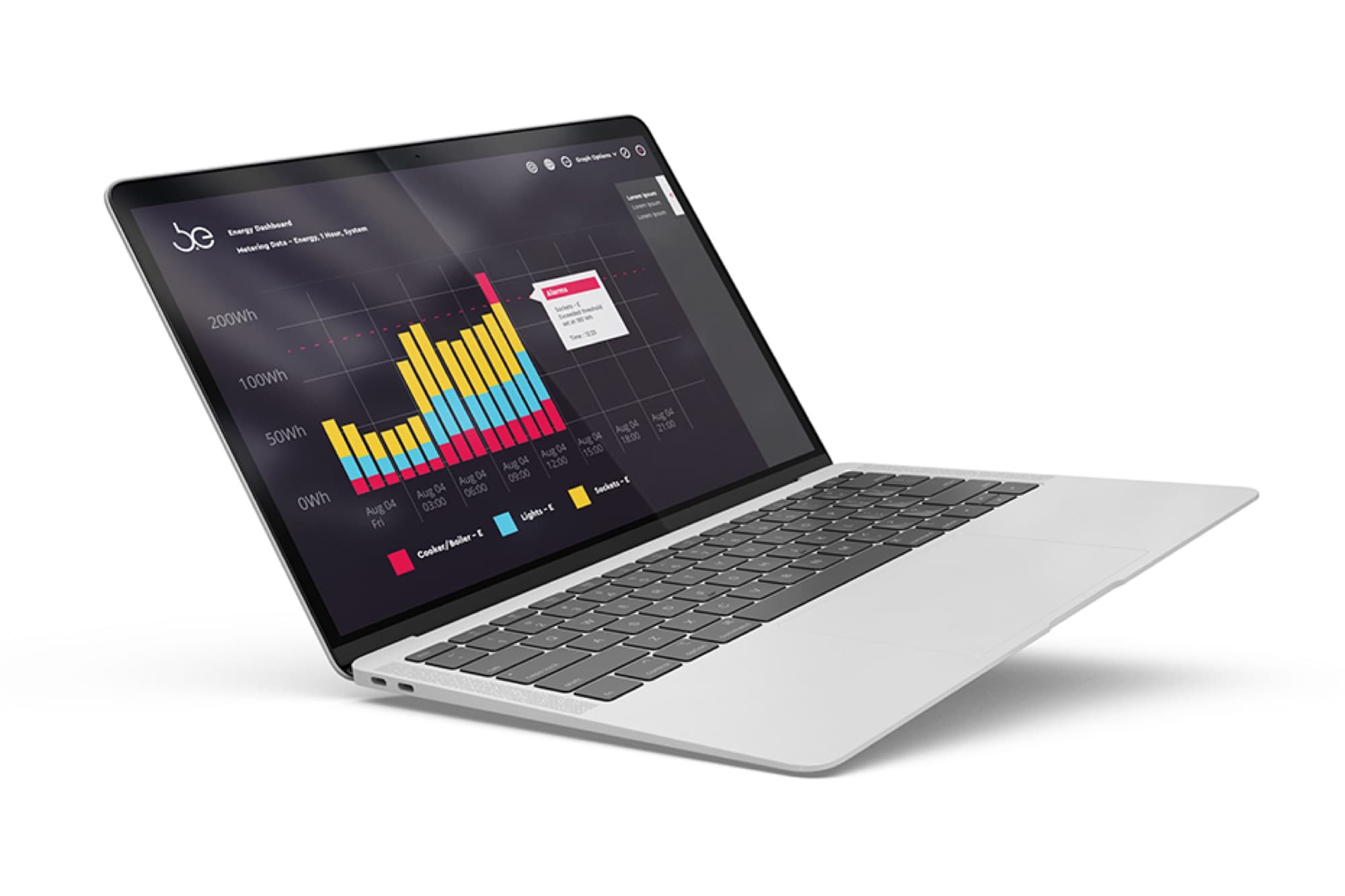 SoftwareA cloud dashboard showing use by asset, site and hour, with alerts when something changes.
 Our teamEnergy management from people who read the data every month and tell you what to do about it.
Start by measuring where the energy goes. In most hotels the biggest savings come from plant running overnight, heating and cooling fighting each other in the same zone, kitchen extraction left on after service, pool plant cycling more than it needs to, and empty rooms kept at full temperature. Circuit-level monitoring finds these, and most cost little or nothing to fix. An SEAI-funded energy audit is a good first step if the hotel spends over €10,000 a year on energy.
Yes, if the business is an SME and spends at least €10,000 a year on energy at the hotel. The SEAI Support Scheme for Energy Audits provides a €2,000 voucher towards an audit by an SEAI-registered auditor, one voucher per organisation. Hotel groups with 250 or more staff cannot use the voucher because they are already obliged to audit every four years. VisionGreen has carried out 271 SEAI energy audits.
They should not. The savings we target are in plant, scheduling and control: equipment running when nobody needs it, setpoints that drifted, and systems working against each other. Guests do not notice those changes.
Energy per occupied room night is the most useful single measure, because it separates waste from busy periods. Comparing it across properties, and against the same month last year, shows which hotel needs attention.
The hardware is installed in the electrical boards, usually without shutting the hotel down. The time depends on the number of circuits metered and the number of sites. Data starts flowing as soon as the meters are live.
If you spend over €10,000 a year on energy, the Support Scheme for Energy Audits covers most of the cost. An engineer walks the site and writes up what to fix and what it returns.


